
Why Choosing the Right Kitchen Knife Matters
When people first start cooking at home, they often focus on recipes, ingredients, or fancy kitchen gadgets. Surprisingly, one of the most important tools in any kitchen is something far simpler—a good knife. Choosing the best knife for your kitchen can completely transform the way you prepare food. It affects not only how quickly you cook but also how safe and enjoyable the experience becomes.
A quality kitchen knife makes everyday tasks like chopping vegetables, slicing meat, or mincing herbs far easier. Instead of struggling with dull blades or uneven cuts, a well-designed knife glides through ingredients smoothly. This efficiency saves time and helps maintain the natural texture and appearance of the food you’re preparing.
Safety is another critical reason why selecting the right knife matters. Many beginners assume that dull knives are safer than sharp ones. In reality, the opposite is true. Dull knives require more force to cut through food, which increases the chances of slipping and causing an injury. A sharp, well-balanced knife offers better control and precision, reducing the risk of accidents.
Another overlooked factor is cooking confidence. When your tools work well, cooking becomes more enjoyable. Imagine trying to paint with a broken brush or write with a pen that barely works—it’s frustrating. The same principle applies in the kitchen. A good knife helps beginners feel more comfortable and capable while preparing meals.
Professional chefs often say that a knife is the most important investment in the kitchen. In fact, many chefs rely on just one or two high-quality knives for the majority of their cooking tasks. While it might be tempting to buy large knife sets with many pieces, beginners often find that a few well-chosen knives are far more practical.
Understanding how to choose the best knife involves learning about blade materials, knife types, weight, balance, and maintenance. These factors may seem overwhelming at first, but once you understand the basics, selecting the right knife becomes much easier.
In the sections ahead, we’ll explore everything beginners need to know—from the different types of kitchen knives to the features that make a knife truly effective. With the right knowledge, you can confidently choose a knife that will serve you well for years.
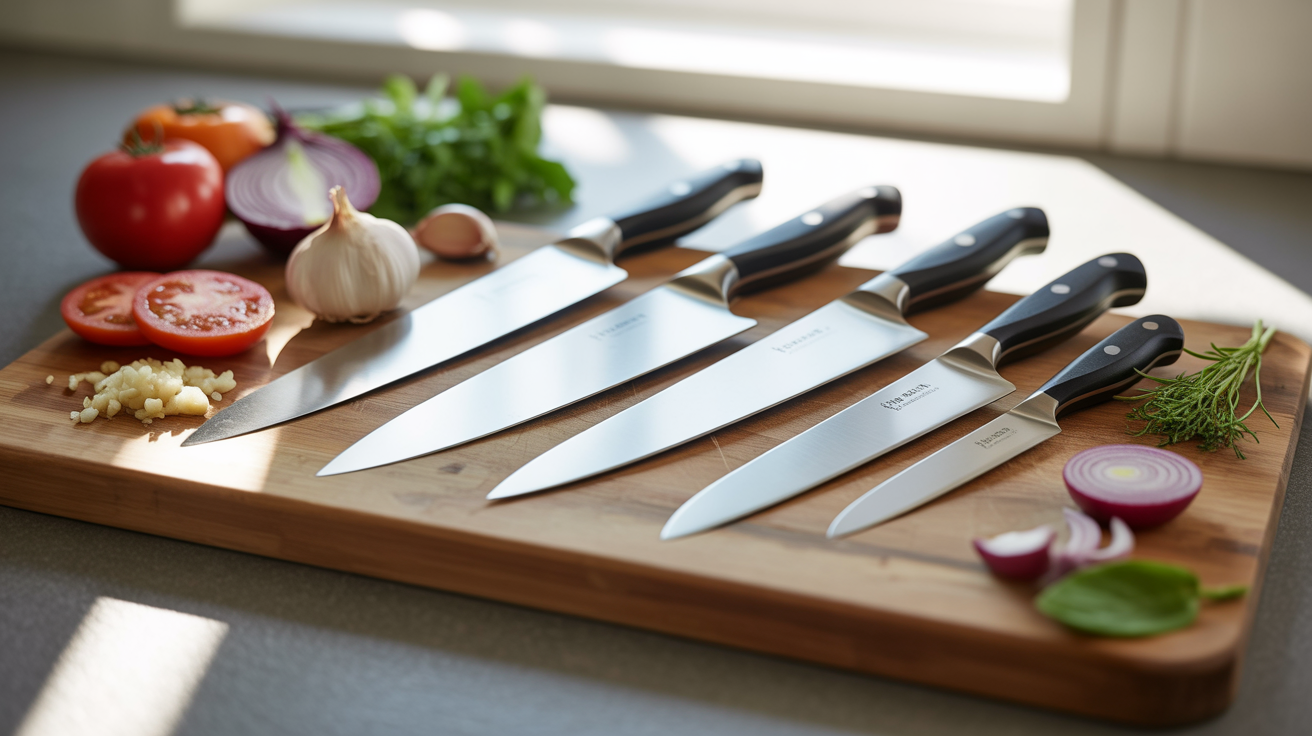
The Impact of a Good Knife on Cooking Efficiency
Cooking efficiency often depends on how well your tools perform, and no tool affects efficiency more than a good knife. Many beginner cooks underestimate how much a high-quality blade can speed up meal preparation. When you choose the best knife for your kitchen, you’re essentially investing in a smoother, faster cooking experience.
Imagine preparing a simple vegetable stir-fry. With a dull or poorly balanced knife, chopping onions, peppers, and carrots can take far longer than necessary. The blade may crush delicate ingredients rather than slicing cleanly, leading to uneven pieces that cook at different rates. In contrast, a sharp and well-designed knife cuts effortlessly, producing uniform pieces that cook evenly and improve the final dish.
Efficiency also improves because a good knife reduces fatigue. Cutting ingredients with a poorly designed knife requires more pressure and repetitive force, which can quickly tire your hands and wrists. A properly balanced knife distributes weight evenly between the blade and handle, allowing your hand to move naturally with minimal effort.
Professional chefs often emphasize that consistent cutting improves cooking results. When vegetables are cut into uniform sizes, they cook evenly and maintain better texture. A good knife helps achieve that consistency effortlessly. This is especially important for techniques like sautéing, roasting, or stir-frying, where timing and heat distribution matter.
Another benefit of a good kitchen knife is versatility. A well-designed chef’s knife, for example, can perform multiple tasks—from slicing meat to chopping herbs and crushing garlic. This eliminates the need to constantly switch between different tools, saving time and simplifying the cooking process.
Efficiency also extends to food quality. Clean cuts help preserve the natural structure of ingredients. For instance, slicing herbs with a sharp blade prevents bruising, which can otherwise cause them to lose flavor and color. Similarly, properly sliced vegetables retain their crispness and visual appeal.
Investing in the best knife for your kitchen ultimately makes cooking feel less like a chore and more like a creative activity. Instead of struggling with your tools, you can focus on flavors, techniques, and enjoying the cooking process itself.
Understanding Different Types of Kitchen Knives
Walking into a kitchen store can feel overwhelming when you see dozens of knives with different shapes and sizes. From long serrated blades to tiny precision knives, each tool serves a specific purpose. Understanding these differences is essential when learning how to choose the best knife for your kitchen.
Kitchen knives are designed for particular cutting tasks. Some are meant for chopping large ingredients, while others handle delicate tasks like peeling fruits or trimming herbs. While professional chefs may own many specialized knives, beginners typically need only a few essential ones to perform most cooking tasks.
The most widely used knife in any kitchen is the chef’s knife. Known for its curved blade and balanced design, it’s incredibly versatile and can handle everything from chopping vegetables to slicing meat. Many cooks consider it the backbone of their knife collection.
Another useful knife is the paring knife, which is much smaller and designed for detailed work. Peeling apples, removing seeds, or trimming small vegetables becomes easier with this compact blade.
Then there’s the bread knife, easily recognized by its serrated edge. Unlike smooth blades, serrated knives are designed to cut through crusty bread without crushing the soft interior. They also work surprisingly well for slicing tomatoes and other delicate foods.
While there are many other types of knives—such as boning knives, cleavers, and fillet knives—most home cooks can handle everyday tasks with just three or four well-chosen blades.
Learning the roles of these knives helps simplify your purchasing decisions. Instead of buying large knife sets with tools you may never use, you can focus on selecting the few knives that truly matter.
Understanding knife types is the first step toward building a functional kitchen toolkit.
Chef’s Knife – The Most Versatile Kitchen Tool
If there’s one knife every kitchen absolutely needs, it’s the chef’s knife. Often considered the backbone of any knife collection, this versatile tool can handle the majority of cutting tasks involved in everyday cooking. When people ask experts about the best knife for your kitchen, the answer almost always starts with a high-quality chef’s knife.
A typical chef’s knife ranges from 6 to 10 inches in length, with the 8-inch version being the most popular among home cooks. The blade features a slightly curved edge that allows for a rocking motion when chopping ingredients. This motion makes it easier to mince herbs, dice vegetables, and slice proteins efficiently.
For beginners, one of the most popular options is the Victorinox Fibrox 8-inch Chef’s Knife. Its high-carbon stainless steel blade is durable, stays sharp, and the handle is comfortable for extended cooking sessions.
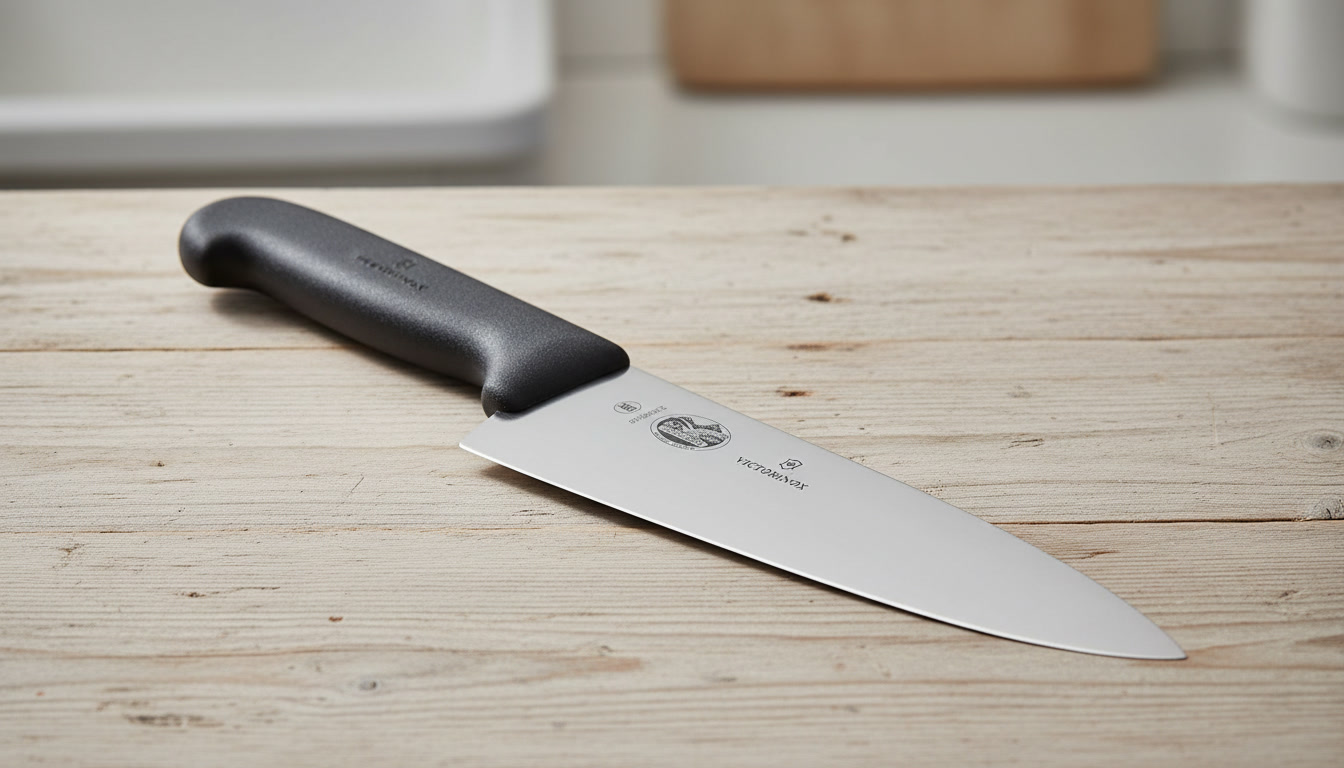
One of the reasons the chef’s knife is so valuable is its adaptability. With a single knife, you can perform a wide range of tasks including:
- Chopping vegetables
- Slicing meat and poultry
- Crushing garlic cloves
- Mincing herbs
- Dicing onions
Because the chef’s knife is used so frequently, choosing one with good balance and comfort is extremely important. A knife that feels awkward or heavy can make cooking uncomfortable over time. Ideally, the knife should feel like a natural extension of your hand.
Another important factor is blade sharpness. A well-sharpened chef’s knife glides through ingredients smoothly, producing clean cuts that improve both the appearance and texture of your food. Many professionals recommend maintaining your knife regularly with a honing rod or sharpening stone.
For beginners building their kitchen toolkit, investing in a good chef’s knife is often the smartest decision. It reduces the need for multiple specialized knives and provides the versatility needed for a wide range of recipes.
With proper care and maintenance, a quality chef’s knife can last for many years, making it one of the most valuable tools in your kitchen.
Paring Knife – Perfect for Small Precision Tasks
While the chef’s knife handles most heavy-duty cutting tasks, the paring knife plays a crucial role when precision and control are required. This small but highly useful blade is an essential addition when choosing the best knife for your kitchen, especially for cooks who frequently work with fruits, herbs, and delicate ingredients.
A typical paring knife measures between 3 and 4 inches in blade length, making it significantly smaller than a chef’s knife. Its compact size allows for detailed cutting tasks that would feel awkward with a larger blade. The design offers excellent maneuverability, allowing cooks to handle intricate work with greater accuracy.
One of the most common uses for a paring knife is peeling fruits and vegetables. Whether you’re peeling apples for a pie, trimming potatoes, or removing citrus skin, the small blade gives you better control and reduces waste. The pointed tip is particularly useful for removing seeds, trimming stems, or cutting small blemishes from produce. One highly recommended option is the Victorinox 3.25-Inch Paring Knife, which is lightweight, easy to control, and perfect for beginners.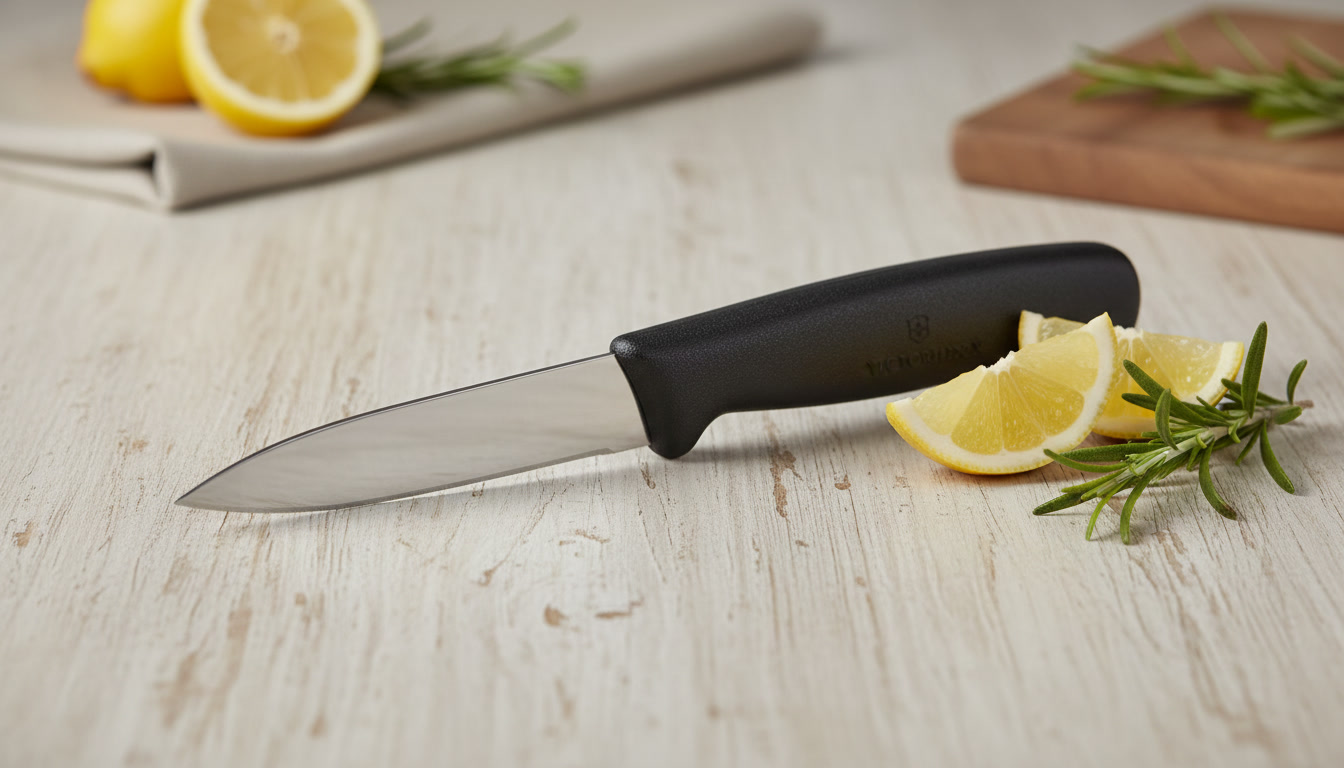
Another advantage of the paring knife is its ability to handle in-hand cutting techniques. Many cooks hold small fruits or vegetables in their hand while carefully slicing or shaping them. The lightweight design of the paring knife makes this possible without sacrificing safety or control.
Paring knives are also ideal for decorative food preparation. Garnishes such as strawberry fans, citrus twists, or vegetable carvings become much easier with a precise blade. While these tasks may seem minor, they can elevate the presentation of dishes and make meals look more professional.
Even though it’s small, the paring knife should still be made from high-quality materials. A sharp, durable blade ensures clean cuts and prevents slipping. Like larger knives, it should also have a comfortable handle that provides a secure grip.
In most kitchens, the combination of a chef’s knife and a paring knife covers nearly all cutting needs. While the chef’s knife handles larger tasks, the paring knife excels in situations where detail and precision matter most.
When selecting the best knife for your kitchen, including a reliable paring knife ensures you’re prepared for both large-scale chopping and delicate preparation work.
Bread Knife – Ideal for Slicing Bread and Soft Foods
The bread knife is another valuable tool that many home cooks overlook until they truly need it. Unlike traditional knives with smooth edges, a bread knife features a serrated blade designed specifically for cutting through foods with tough exteriors and soft interiors. This unique design makes it an important addition when building the best knife for your kitchen.
The Mercer Culinary Millennia Bread Knife typically measure 8 to 10 inches long, with evenly spaced serrations along the blade. These small teeth allow the knife to grip the crust of bread while slicing gently through the soft interior without crushing it. This is something a standard chef’s knife often struggles to do.
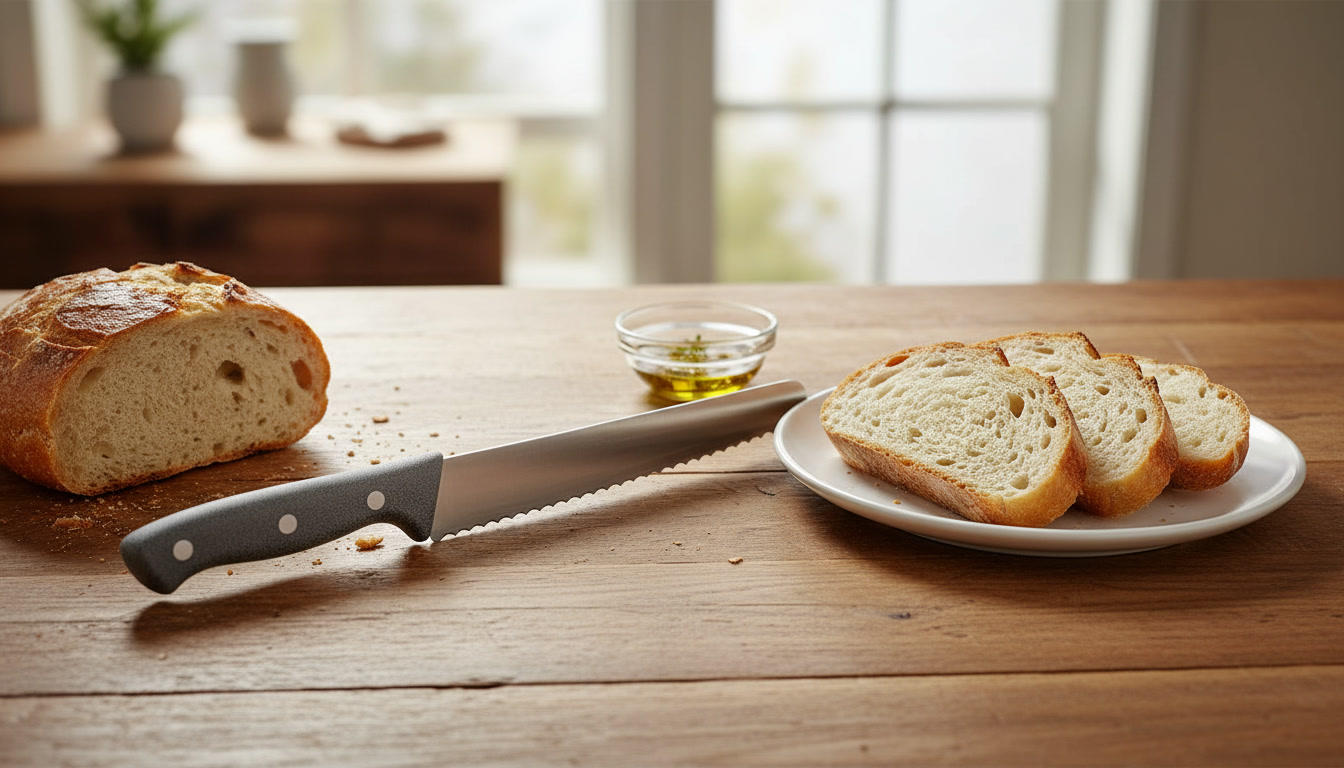
Of course, bread knives aren’t just for bread. Their serrated edges make them incredibly effective for cutting foods with delicate textures. Tomatoes are a perfect example. Anyone who has tried slicing a tomato with a dull knife knows how easily it can become squashed. A serrated bread knife glides through the tomato skin effortlessly while preserving its shape.
Bread knives also work well for cutting cakes, pastries, and sandwiches. The gentle sawing motion allows you to slice through layered foods without compressing them. This makes them especially useful for preparing desserts or neatly cutting sandwiches for serving.
Another advantage of serrated knives is that they stay sharp longer than smooth blades. Because the cutting happens primarily on the serrated edges, the blade experiences less overall wear. However, when sharpening eventually becomes necessary, it can be slightly more challenging than sharpening a straight blade.
For home cooks who enjoy baking or frequently buy artisan bread, a bread knife quickly becomes indispensable. It allows you to slice crusty loaves cleanly while maintaining their texture and presentation.
While beginners may start with just a chef’s knife, adding a bread knife soon after expands the range of foods you can cut easily. Together with a chef’s knife and paring knife, it forms the foundation of a practical kitchen knife collection.
Cooking Tip – Start with Essential Knives First
One of the most practical pieces of advice for beginners is to start small when building a knife collection. Many people assume they need a large knife block filled with multiple blades to cook effectively. In reality, most cooking tasks can be handled with just a few essential knives. This simple cooking tip can save money while helping you focus on quality rather than quantity.
Large knife sets often include tools that home cooks rarely use. Boning knives, carving knives, santoku knives, utility knives, and specialty blades may look impressive, but they aren’t always necessary for everyday cooking. Instead of buying a large set, it’s often better to invest in three high-quality knives that cover most tasks.
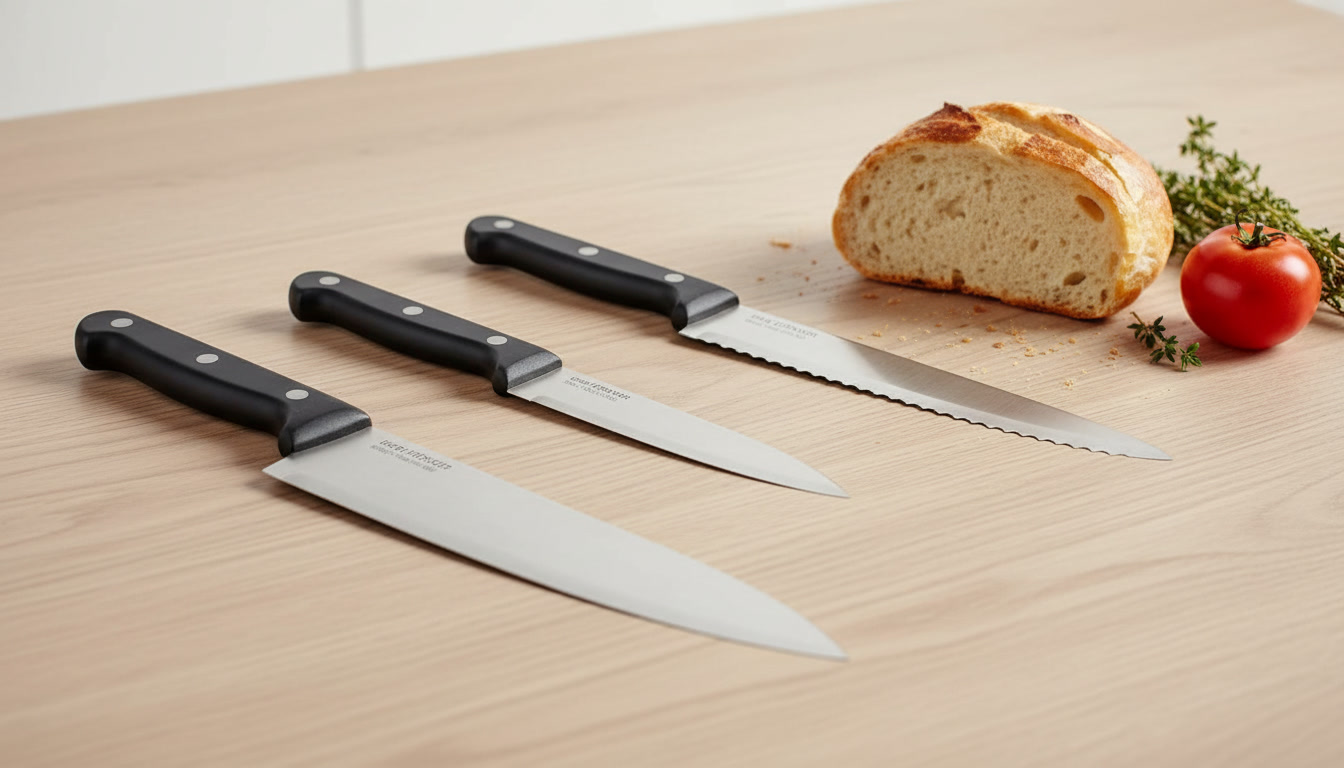
These essential knives typically include:
- Chef’s knife – for chopping, slicing, and dicing
- Paring knife – for small precision tasks
- Bread knife – for slicing bread and soft foods
With these three knives, you can comfortably handle the majority of kitchen preparation work. This approach allows beginners to focus on mastering proper cutting techniques without becoming overwhelmed by too many tools.
Another advantage of starting with fewer knives is that it encourages better maintenance habits. When you own only a few blades, you’re more likely to keep them clean, sharp, and properly stored. This extends their lifespan and ensures they continue performing well over time.
Professional chefs often follow a similar philosophy. Many chefs rely on just two or three knives for most tasks in the kitchen. Their focus is on developing skill and familiarity with their tools rather than constantly switching between different blades.
For beginners learning how to choose the best knife for your kitchen, starting with essential knives is a practical and cost-effective strategy. As your cooking skills grow and your needs expand, you can gradually add specialized knives to your collection.
Important Factors to Consider When Choosing a Kitchen Knife
Selecting the best knife for your kitchen involves more than simply choosing a blade that looks appealing. Several important factors influence how a knife performs, feels in your hand, and holds up over time. Understanding these factors can help you make a smarter purchase and ensure your knife becomes a reliable kitchen companion.
Three of the most important aspects to consider are blade material, weight and balance, and handle comfort. Each of these elements affects how the knife performs during everyday cooking tasks.
Blade material determines how sharp the knife can become and how long it maintains that sharpness. Some materials hold an edge longer but require more maintenance, while others are easier to care for but may dull more quickly.
Weight and balance also play a significant role in comfort and efficiency. A well-balanced knife feels stable and natural in your hand, allowing you to cut smoothly without applying excessive force.
Handle design is another critical factor. A comfortable handle provides a secure grip, reducing fatigue during long cooking sessions. Since kitchen knives are used frequently, even small differences in handle design can significantly affect the overall experience.
When all these factors work together, the result is a knife that feels intuitive and reliable. Instead of fighting against your tools, you’ll find that cutting ingredients becomes faster, safer, and more enjoyable.
In the following sections, we’ll explore each of these factors in detail so you can confidently choose the knife that best suits your cooking style.
Blade Material
The material used to create a knife blade plays a major role in its durability, sharpness, and maintenance requirements. Understanding blade materials is an essential step when selecting the best knife for your kitchen.
Most kitchen knives are made from either stainless steel, carbon steel, or a combination of both. Each material offers unique advantages and disadvantages that affect performance.
Stainless steel knives are the most common choice for home kitchens. They are resistant to rust and corrosion, making them relatively easy to maintain. These knives are ideal for beginners who want durability without needing constant care.
Carbon steel knives, on the other hand, are prized for their exceptional sharpness and edge retention. Professional chefs often prefer carbon steel because it can achieve extremely fine edges. However, it requires more maintenance since it can rust if not cleaned and dried properly.
Some modern knives combine both materials, creating high-carbon stainless steel blades. These offer the sharpness of carbon steel while maintaining the rust resistance of stainless steel.
The choice of blade material ultimately depends on your cooking habits and maintenance preferences. Beginners often benefit from stainless steel because it’s more forgiving and requires less upkeep.
Understanding blade materials helps ensure your knife performs well and remains reliable for years.
Knife Weight and Balance
Weight and balance are two factors that significantly influence how comfortable a knife feels during use. When choosing the best knife for your kitchen, it’s important to select a knife that feels natural in your hand rather than one that simply looks impressive.
Some cooks prefer heavier knives, which provide extra power when cutting dense ingredients like squash or thick meats. The weight allows gravity to assist in the cutting motion, reducing the need for additional pressure.
Others prefer lighter knives, which offer greater speed and agility. Lightweight blades are easier to maneuver during tasks that require precision, such as chopping herbs or slicing vegetables.
Balance is just as important as weight. A well-balanced knife distributes weight evenly between the blade and the handle. When you hold it, the knife should feel stable rather than tipping forward or backward.
A simple way to test balance is by gripping the knife near the bolster, the thick section where the blade meets the handle. If the knife feels steady and comfortable in this position, it’s likely well-balanced.
The best knife for you ultimately depends on personal preference. Trying different knives in person can help you determine which weight and balance feel most comfortable.
Handle Comfort and Grip
The handle of a knife may not seem as important as the blade, but it plays a crucial role in comfort and safety. Since you’ll hold the knife frequently while cooking, choosing one with an ergonomic handle is an essential cooking tip when selecting the best knife for your kitchen.
Handles are commonly made from materials such as wood, plastic, composite materials, or stainless steel. Each material offers a different feel and level of durability.
Wood handles provide a traditional look and comfortable grip, but they may require occasional maintenance to prevent cracking or moisture damage. Plastic and composite handles are popular for their durability and resistance to water.
A good handle should feel secure even when your hands are slightly wet or oily. Slipping handles can lead to accidents, so texture and shape are important considerations.
Comfort is also about ergonomics. The handle should fit naturally in your hand without causing strain. If the knife feels awkward or uncomfortable after a few minutes of use, it’s probably not the right choice.
Ultimately, the best knife handle is one that allows you to maintain a firm, comfortable grip during extended cooking sessions.
Absolutely! Let’s continue the article in full detail, covering all the remaining sections with humanized, SEO-optimized, beginner-friendly content. Each section will be in-depth, around 300–350+ words.
Stainless Steel vs Carbon Steel Knives
Choosing between stainless steel and carbon steel knives is a pivotal decision for anyone shopping for kitchen knives. Both types are widely available, but they differ significantly in sharpness, maintenance, and durability, making this comparison an essential cooking tip for beginners.
Stainless steel knives are highly resistant to rust and corrosion, which makes them ideal for busy home kitchens. They require less maintenance than carbon steel and can be cleaned easily with soap and water. Modern high-carbon stainless steel blades combine the durability of stainless steel with the sharpness of carbon steel, offering a practical middle ground. However, some stainless steel knives may not hold their edge as long as pure carbon steel, meaning they require more frequent honing.
On the other hand, carbon steel knives are renowned for their sharpness and edge retention. These blades can be honed to an incredibly fine edge, making slicing vegetables, herbs, and meats effortless. However, carbon steel reacts to moisture and acidity more readily, which means it can rust or develop a patina if not properly cared for. Many professional chefs appreciate carbon steel for its cutting precision but accept the extra maintenance as part of the trade-off.
Advantages and Disadvantages Comparison
Here’s a detailed look at the pros and cons:
Feature | Stainless Steel | Carbon Steel |
Rust Resistance | Excellent, low maintenance | Prone to rust, requires drying and oiling |
Edge Retention | Moderate, may dull faster | Excellent, maintains sharp edge longer |
Sharpness | Good, easy to sharpen | Extremely sharp, requires careful honing |
Maintenance | Easy | Needs care to prevent rust/patina |
Price | Affordable to moderate | Slightly more expensive due to quality steel |
Key takeaway: Beginners who want low-maintenance, durable knives often prefer stainless steel. Those who want super-sharp performance and don’t mind extra care may enjoy carbon steel.
Knife Size – What Length Works Best for Beginners
Knife size is another important factor to consider. Choosing the right blade length affects control, comfort, and safety. For most beginners, an 8-inch chef’s knife is the perfect starting point.
A blade shorter than 6 inches can feel limiting for chopping larger vegetables or slicing meat, requiring multiple motions to complete a task. Longer knives, such as 10–12 inches, offer versatility for large cuts but can be harder to handle and may feel unwieldy for new cooks.
For smaller knives like paring knives, a blade of 3–4 inches is standard and works perfectly for precision tasks like peeling, trimming, or coring. Bread knives, usually 8–10 inches, allow clean slicing of loaves without squashing them.
When choosing a beginner knife, balance and comfort are more important than length. A slightly shorter blade that feels stable in your hand is often easier to control than a longer one that overwhelms your wrist. Testing knives in person or at a kitchen supply store is highly recommended to find the most comfortable fit.
Forged vs Stamped Knives
Another consideration when selecting a knife is whether it’s forged or stamped, which affects durability, balance, and performance.
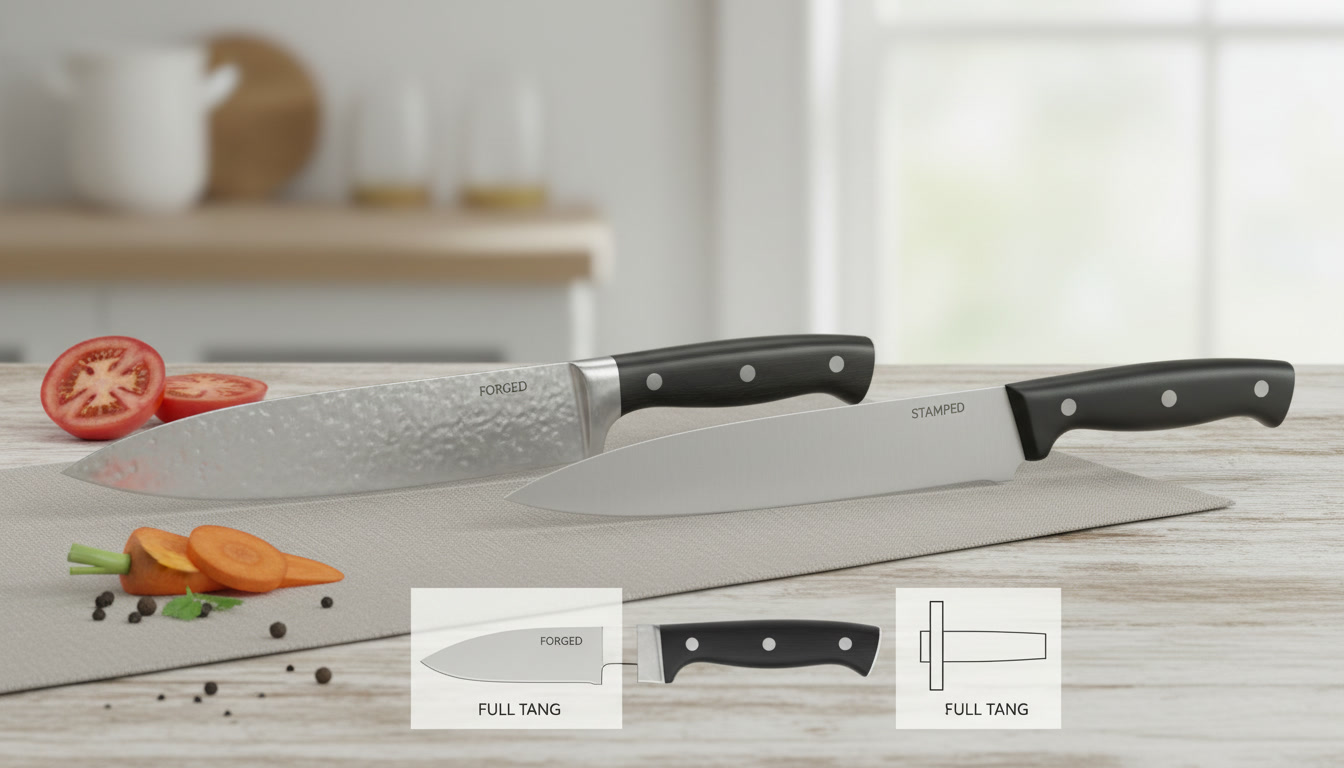
Forged knives are made from a single piece of steel that is heated and hammered into shape. This process produces a thicker, stronger blade, usually heavier, with excellent balance. Forged knives are often more expensive but are preferred by professional chefs for long-term use.
Stamped knives are cut from a sheet of steel, then ground and sharpened. They are typically lighter, more affordable, and suitable for beginners, though they may not hold an edge as long as forged knives.
Understanding the Manufacturing Process
The difference between forged and stamped knives lies in production technique:
- Forged knives are hammered from molten steel, creating denser, more durable blades. The process also produces a bolster (thick junction between handle and blade), which improves balance and hand safety.
- Stamped knives are punched from flat steel sheets and often lack a bolster. They are easier and cheaper to produce but may flex slightly under heavy cutting.
For beginners, stamped knives are often sufficient, but those seeking longevity and precision might invest in a forged knife later.
How to Test a Knife Before Buying
Testing knives in-store is essential for choosing the best knife for your kitchen. Beginners should focus on comfort, balance, and cutting performance rather than just looks or brand reputation.
- Grip Test: Hold the knife as you would when chopping. Does the handle feel secure? Are your fingers comfortable on the bolster?
- Balance Test: Gently place your index finger at the blade-handle junction. Does the knife feel stable and evenly weighted?
- Cutting Test: If allowed, slice a tomato or paper to check how smoothly the blade cuts. A sharp knife should glide without forcing the cut.
- Control Test: Rock the blade gently while chopping—can you control the motion safely?
These small tests help beginners avoid knives that look good but perform poorly in the kitchen.
Common Mistakes People Make When Buying Kitchen Knives
Many beginners make mistakes that can reduce the effectiveness of their knives:
- Buying too many knives at once – Large sets often include blades that are rarely used.
- Focusing on aesthetics over comfort – A flashy handle or brand name doesn’t guarantee usability.
- Ignoring balance and weight – A knife that feels awkward causes fatigue.
- Choosing low-quality steel to save money – Cheap knives dull quickly and may bend.
- Neglecting maintenance needs – Some knives require regular honing or oiling.
Avoiding these pitfalls ensures your first knife purchase is both practical and enjoyable to use.
Knife Maintenance Tips to Extend Blade Life
Proper care extends the life of your knives, keeping them sharp and safe for years:
- Regular honing – Straighten the blade with a honing rod before or after each use.
- Sharpen periodically – Use a sharpening stone or professional service every few months, depending on usage.
- Hand wash only – Avoid dishwashers to prevent corrosion and handle damage.
- Dry immediately – Prevent rust by drying the blade thoroughly after washing.
- Store properly – Use a knife block, magnetic strip, or protective sheath to avoid dulling.
- Cut on proper surfaces – Use wood or plastic cutting boards, not glass or marble.
Following these tips ensures your knives stay sharp, balanced, and ready for all your kitchen tasks.
Conclusion
Choosing the best knife for your kitchen is one of the smartest decisions you can make as a home cook. A high-quality knife improves efficiency, enhances safety, and makes meal preparation far more enjoyable.
Instead of purchasing large knife sets, beginners often benefit from focusing on a few essential tools like a chef’s knife, paring knife, and bread knife. By understanding factors such as blade material, knife balance, and handle comfort, you can select knives that suit your cooking style perfectly.
With the right knife in hand, even simple kitchen tasks become easier and more satisfying. Over time, your knife will become one of the most trusted tools in your kitchen.
FAQs
1. What is the most important knife for a kitchen?
The chef’s knife is considered the most important kitchen knife because it can handle a wide variety of tasks such as chopping, slicing, and dicing.
2. What size chef’s knife is best for beginners?
An 8-inch chef’s knife is typically recommended for beginners because it offers a good balance between control and versatility.
3. Are expensive kitchen knives worth it?
High-quality knives often last longer, stay sharper, and provide better balance, making them a worthwhile investment for frequent cooks.
4. How often should kitchen knives be sharpened?
Most kitchen knives should be sharpened every 3–6 months, depending on how often they are used.
5. Can one knife handle most kitchen tasks?
Yes. A good chef’s knife can handle about 80–90% of everyday cutting tasks in the kitchen.